
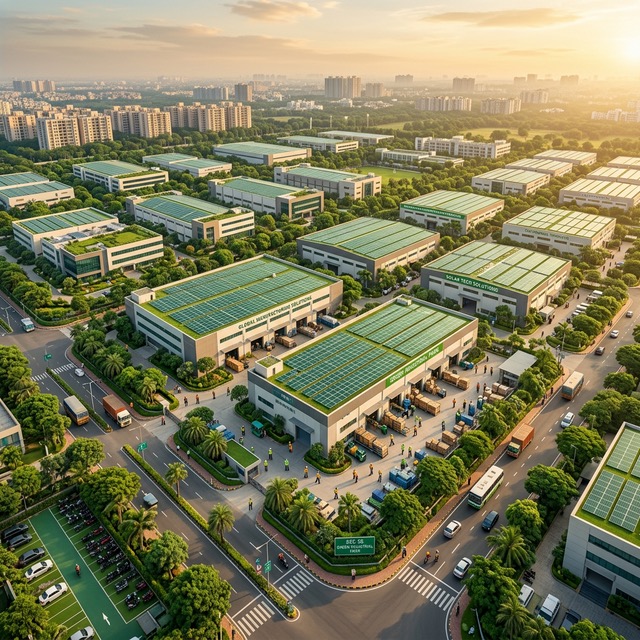
India's Circular Economy Mandate
India's National Resource Efficiency Policy (NREP) and various waste management rules collectively form the policy backbone for the circular economy transition. The target is to decouple economic growth from resource consumption.
The Linear vs. Circular Model
The traditional "take-make-dispose" model is economically unsustainable and environmentally destructive. The circular economy model — as institutionalized by 3E Concepts — creates closed-loop systems where waste becomes a resource.
Key Circular Economy Principles:
1. **Eliminate waste and pollution** through design and process
2. **Keep products and materials in use** at highest value
3. **Regenerate natural systems** through biological cycles
Industrial Opportunities in India
India's circular economy opportunity is estimated at ₹40 lakh crore by 2050 (Ellen MacArthur Foundation). Key sectors include:
3E Concepts: Engineering the Circular Economy
We don't just facilitate regulatory compliance — we engineer transparent, data-driven pathways for resource conservation and circular economy integration in Indian industry.
Reach us at info@3econcepts.in or visit our Noida office.